May 5, 2027 – May 12, 2027
8 days – $5,000.00
$1000.00 deposit due upon booking
Final payment due January 15, 2027
Tour begins in Maidstone and ends in Portsmouth
*** Limited to 6 participants
Itinerary
Who better than Royal Navy Lieutenant (Retired) and historian Gareth Glover to lead this one-of-a-kind tour? With Gareth’s firsthand knowledge and Kristine Hughes’ engaging social history insights, every stop on the tour comes alive with expert storytelling as you explore England’s naval history. Limited to just six participants, this exclusive tour offers a rich blend of naval history, stunning landscapes, a few castles and even a seaside Royal Pavilion. Whether you’re a historian, author, or simply in search of an unprecedented tour and a personalized travel experience, this tour will appeal to travelers with a wide range of interests. Not to mention two awesome guides and a reasonable number of pub stops.
Day 1
Your journey begins in Maidstone, Kent, where you’ll meet your fellow travelers at our hotel. In the evening, we’ll gather for a Welcome Dinner, the perfect opportunity to get acquainted with your fellow adventurers and prepare for the exciting days ahead. Maidstone will be our base for the next four nights.
Day 2
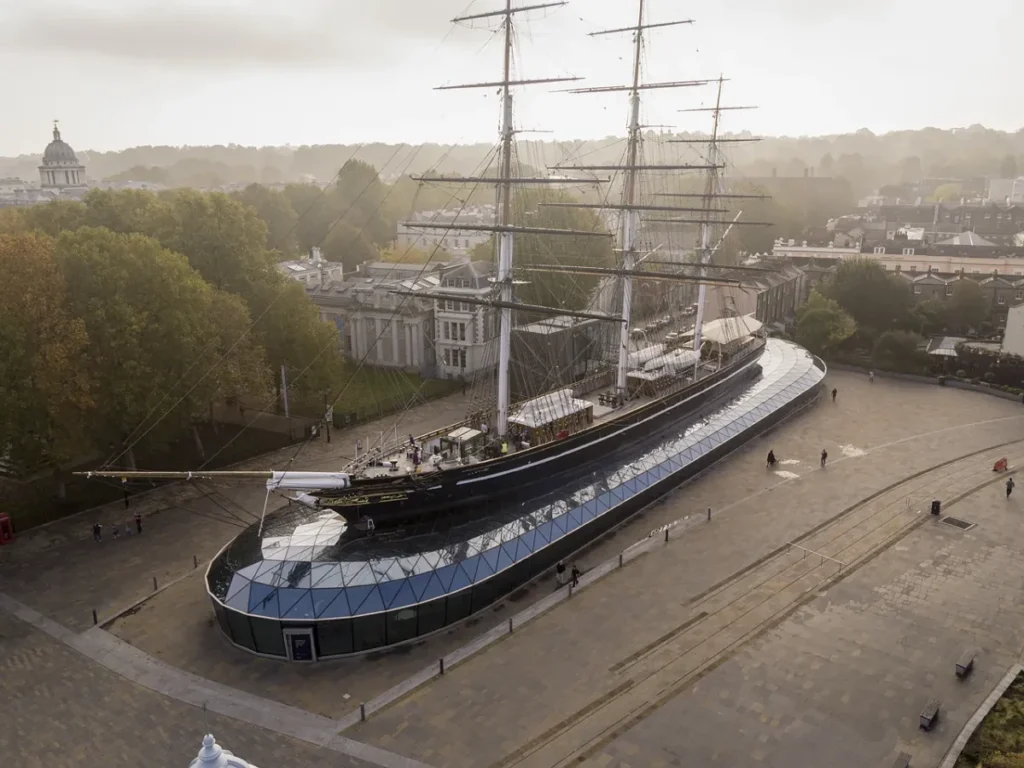
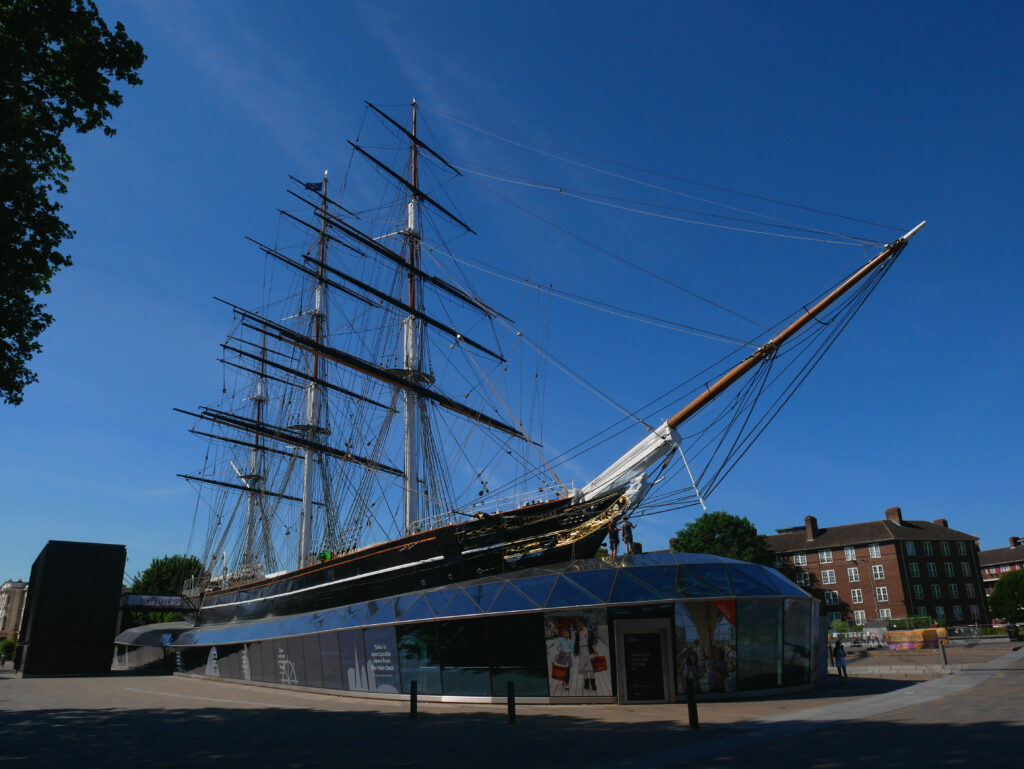
The tour begins in Greenwich, along the banks of the River Thames, a place steeped in maritime heritage. The first stop is the Cutty Sark, a beautifully restored 19th-century tea clipper that once sailed the oceans as one of the fastest ships of its time. Step aboard to immerse yourself in more than 150 years of seafaring history via interactive exhibits, ship plans, historic photographs, and films. Guests can even take the helm on a simulated voyage from Sydney to London and experience firsthand what it was like to live and work aboard this legendary vessel.
From there, the tour continues to the National Maritime Museum, one of the largest maritime museums in the world. This self-guided experience winds through several of the museum’s galleries, where we’ll explore a wide range of exhibits that delve into Britain’s naval history, polar exploration, and global trade. The museum also houses impressive collections of maritime art, historical objects, and interactive displays suitable for all ages.
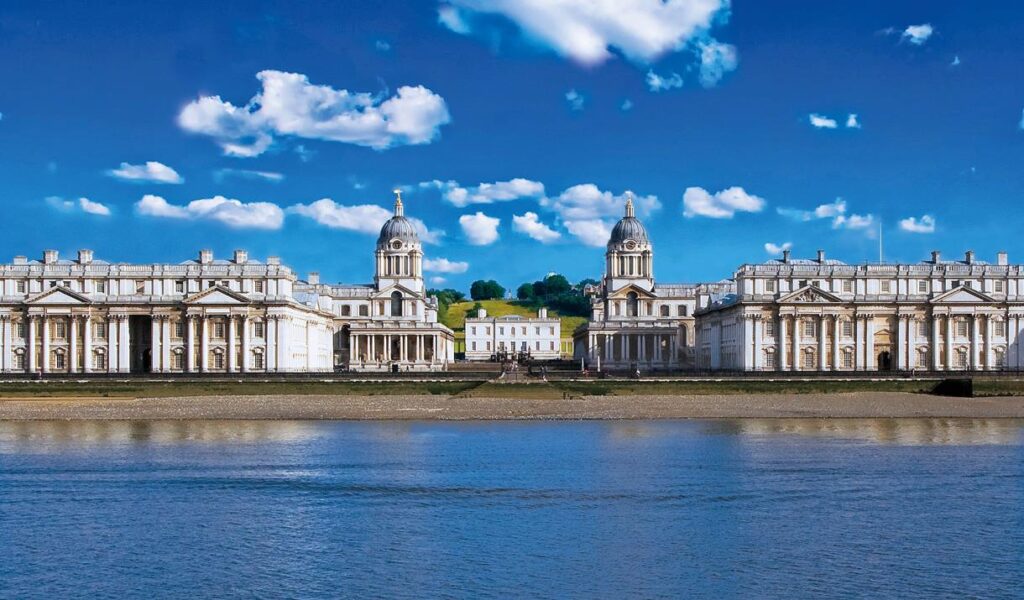
Next, the tour moves on to the Old Royal Naval College, an architectural masterpiece designed by Sir Christopher Wren. Originally constructed as Greenwich Hospital for retired sailors, it’s especially renowned for the Painted Hall, often referred to as the “Sistine Chapel of the UK,” with its breathtaking ceiling and wall decorations.
The final destination is the Royal Observatory, perched atop Greenwich Park. This historic site is home to the Greenwich Meridian Line, the point where east meets west. Here, visitors can stand astride the Prime Meridian, a unique photo opportunity and a chance to reflect on centuries of scientific innovation that shaped modern navigation. Inside the observatory, exhibits on timekeeping, astronomy, and early navigation instruments offer a deeper understanding of how this place revolutionized the way we see the world.
Day 3
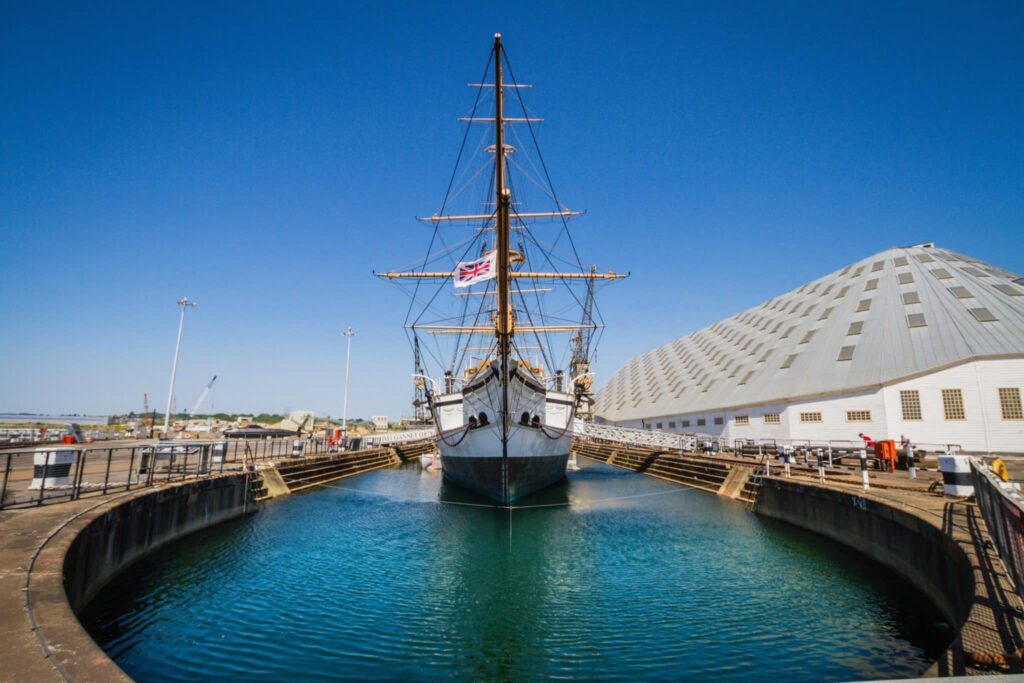
Today begins with a visit to Chatham Dockyard, with over 70,000 objects in their collections, ranging from archaeology, rigging, hand tools, machinery to fine art and photography, related to the Dockyard’s past 400 years. One of Britain’s most important Royal Dockyards, it was associated with many great historical figures of their time – great seamen like Sir Francis Drake and Lord Nelson as well as literary legends such as Samuel Pepys and Charles Dickens. Return to the ‘Age of Sail’ when the Dockyard built mighty ships that toured the world’s oceans.
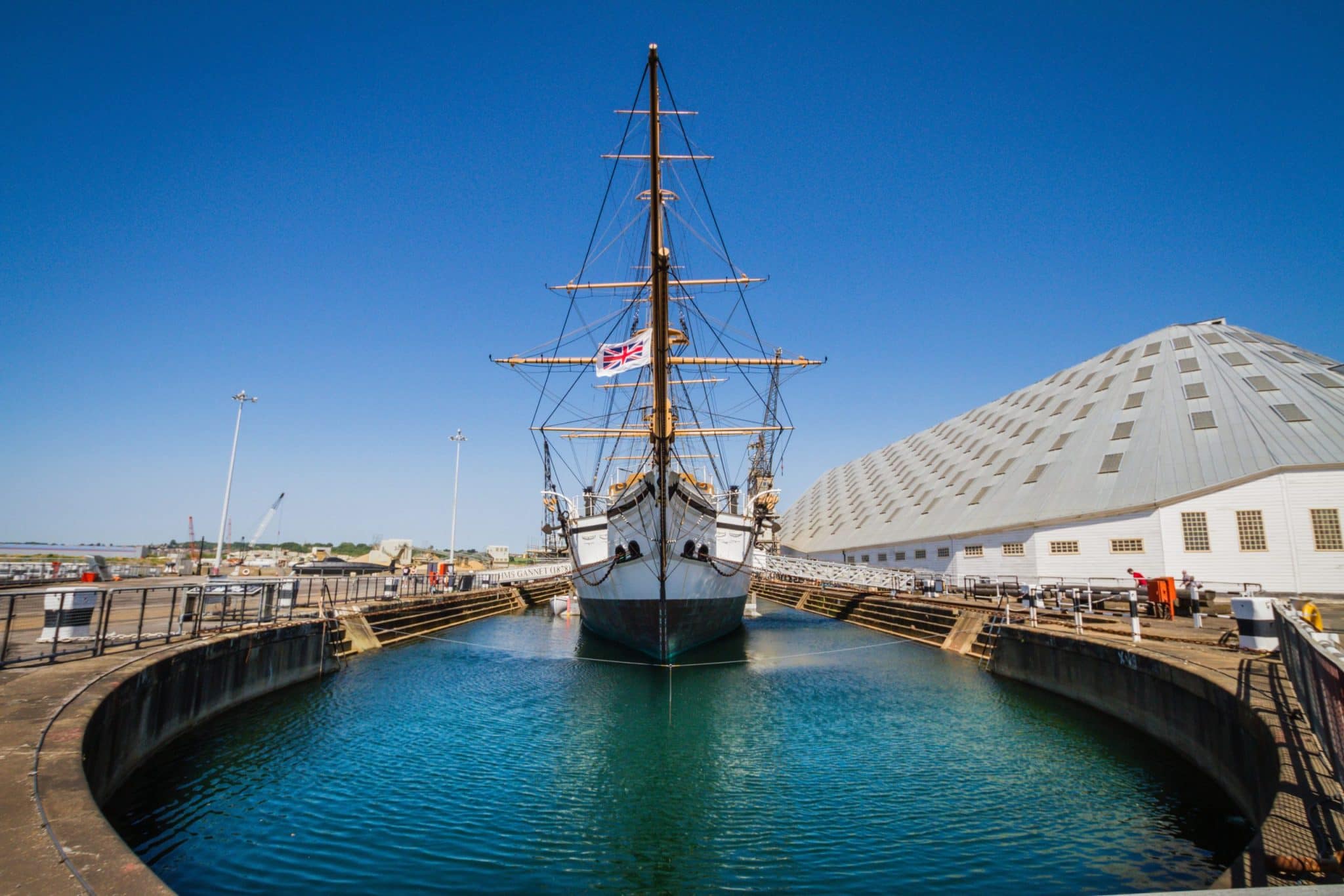
Test your sea legs on HMS OCELOT, a Cold War Submarine; explore HMS CAVALIER, a Second World War Destroyer and walk the deck of HMS GANNET, our Victorian Sloop. You can also watch our Master Ropemakers at work using centuries old techniques on our iconic Ropewalk, once the longest buildings in the United Kingdom, allowing ropemakers to produce long lengths of rope without any joins.
Afterwards, we’ll go on to the Chatham Defenses, the historic Chatham Lines, a system of fortifications built to protect the Royal Navy’s dockyards in Chatham, England, from the mid-18th century onward. You’ll have time for refreshments in the town before we return to Maidstone for dinner this evening.
Day 4
This morning, a short drive brings us to Dover Castle, perched majestically atop the White Cliffs of Dover in Kent, one of the most iconic and historically significant castles in the country. Often referred to as the “Key to England”, it has played a critical defensive role for over 900 years due to its strategic position overlooking the shortest sea crossing between England and continental Europe, just 21 miles away.
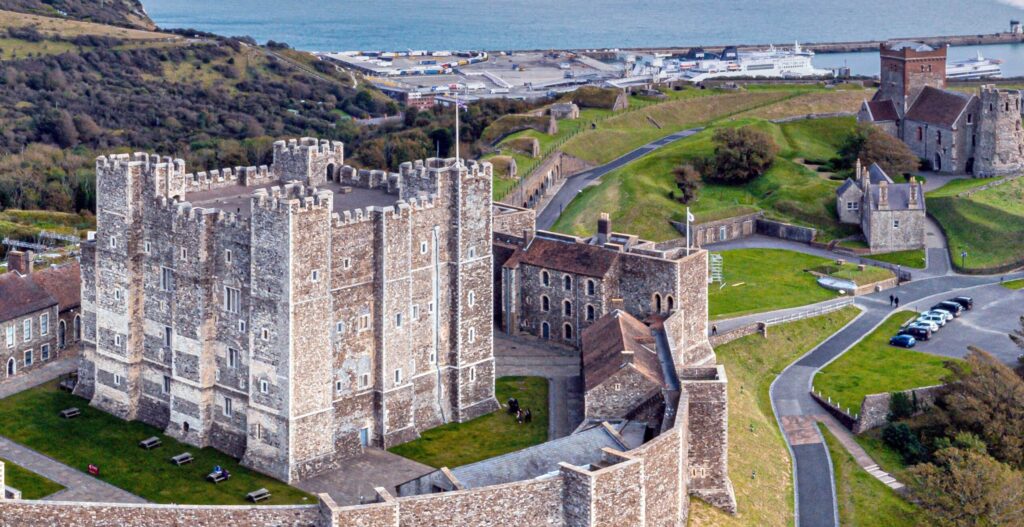
Many outbuildings and features are contained in the grounds, including a Roman lighthouse (Pharos), one of the oldest standing buildings in the UK. The Castle was founded in the 11th century after the Norman Conquest. The main structure, the Great Tower (keep), was built by King Henry II in the 1180s. Extensively expanded and modernized during the medieval period. During the Napoleonic Era, tunnels were expanded to house troops and act as underground barracks and the Castle was used as a command center during WW1 and WW2, when it became the Command centre during the Dunkirk operation.
On our return to Maidstone, where you’ll have free time to explore the town at your own pace—whether you choose to visit its many historic sites, enjoy some shopping, or relax over dinner at one of Maidstone’s inviting pubs or restaurants.
Day 5
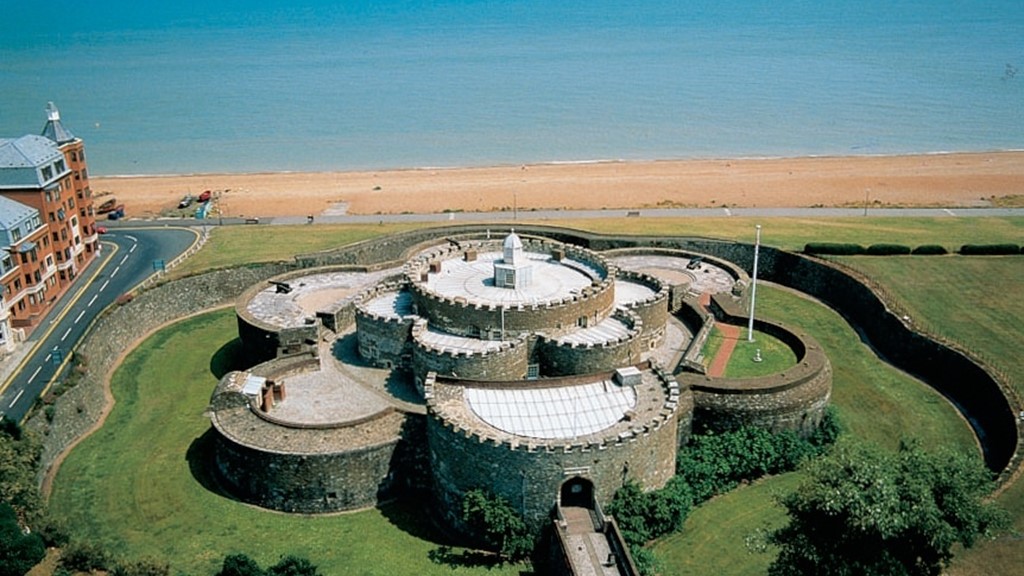
We begin the day at Deal, a charming seaside town associated with naval history, smuggling, and sea defences—most notably through Deal Castle, one of the coastal forts built by Henry VIII. The seafront is lined with a long, pebble beach and a wide promenade that offers stunning views over the English Channel. You’ll have time to explore the town before we visit Deal Castle, actually an artillery fort originally built by Henry VIII, between 1539 and 1540 as part of King’s strategic efforts to protect England’s coastline. Henry VIII was so worried about invasion from Catholic France and Spain, that the castle was the centre of a network of three Tudor artillery forts that included Walmer Castle to the south and Sandown Castle to the north. Jane Austen’s brother, Sir Francis Austen had a strong connection to Deal, Kent, through his naval career. He eventually rose to the rank of Admiral of the Fleet and was knighted, becoming Sir Francis Austen, GCB. Austen was stationed at the Deal naval base, a key location for naval operations during the Napoleonic Wars. Austen commanded ships in and out of Deal and likely stayed at or near the Royal Naval Hospital or officers’ lodgings in the town. While there is no specific house in Deal strongly tied to him (unlike Chawton for Jane Austen herself), his career is part of Deal’s broader naval heritage.
Next, we’re off to Walmer Castle, where the Duke of Wellington often stayed while serving as Lord of the Cinque Ports – a confederation of five ports—originally Hastings, New Romney, Hythe, Dover, and Sandwich—meant to provide ships and men for the Crown. Walmer was constructed low to the ground in a rounded, squat shape, intended to deflect cannon fire and serve as a gun platform. Over time, its’ been transformed from a military fortification into an elegant and comfortable coastal residence, with many more modern conveniences installed by Elizabeth, the Queen Mother, when she served as Lord of the Cinque Ports (1978 – 2002).
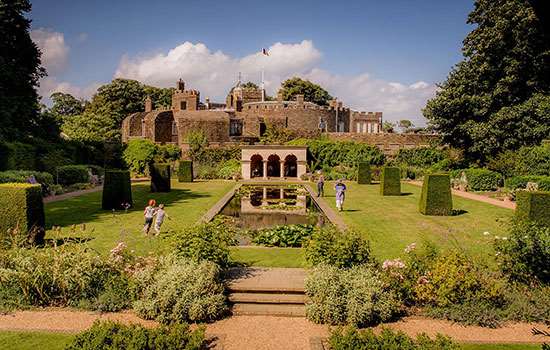
Our last stop of the day will be Sandwich, stopping to inspect the Royal Military Canal on our way. once a thriving port town, and during the Middle Ages, it played a vital role in national defence and trade across the English Channel.
At its peak, Sandwich had a bustling harbour and shipbuilding industry. It supplied vessels for royal campaigns and was a frequent departure point for military expeditions to France. Its strategic position on the Kent coast made it one of England’s key maritime centres during the 11th to 14th centuries. Over time, the River Stour silted up and the sea gradually receded, leaving Sandwich stranded inland and diminishing its importance as a working port.
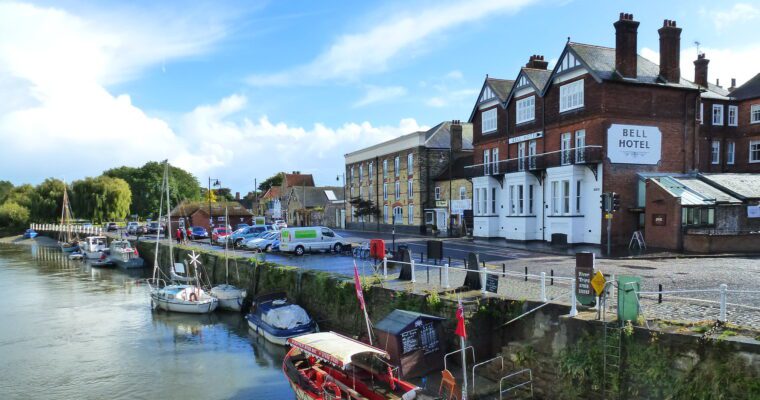
Despite its decline in naval significance, the town has preserved many architectural and cultural traces of its maritime past. You can still see remnants of the old quay and medieval warehouses that once served sea traders and military supplies. The Guildhall Museum in Sandwich contains exhibits and artefacts related to its naval and trading history, offering insights into its former life as a vital coastal stronghold. Today, Sandwich is one of the best-preserved medieval towns in England, with timber-framed houses, narrow winding streets and a few smashing pubs that also serve food. Dinner anyone? Then it’s back our Maidstone hotel to pack before our departure in the morning.
Day 6
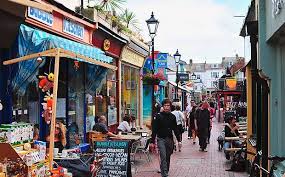
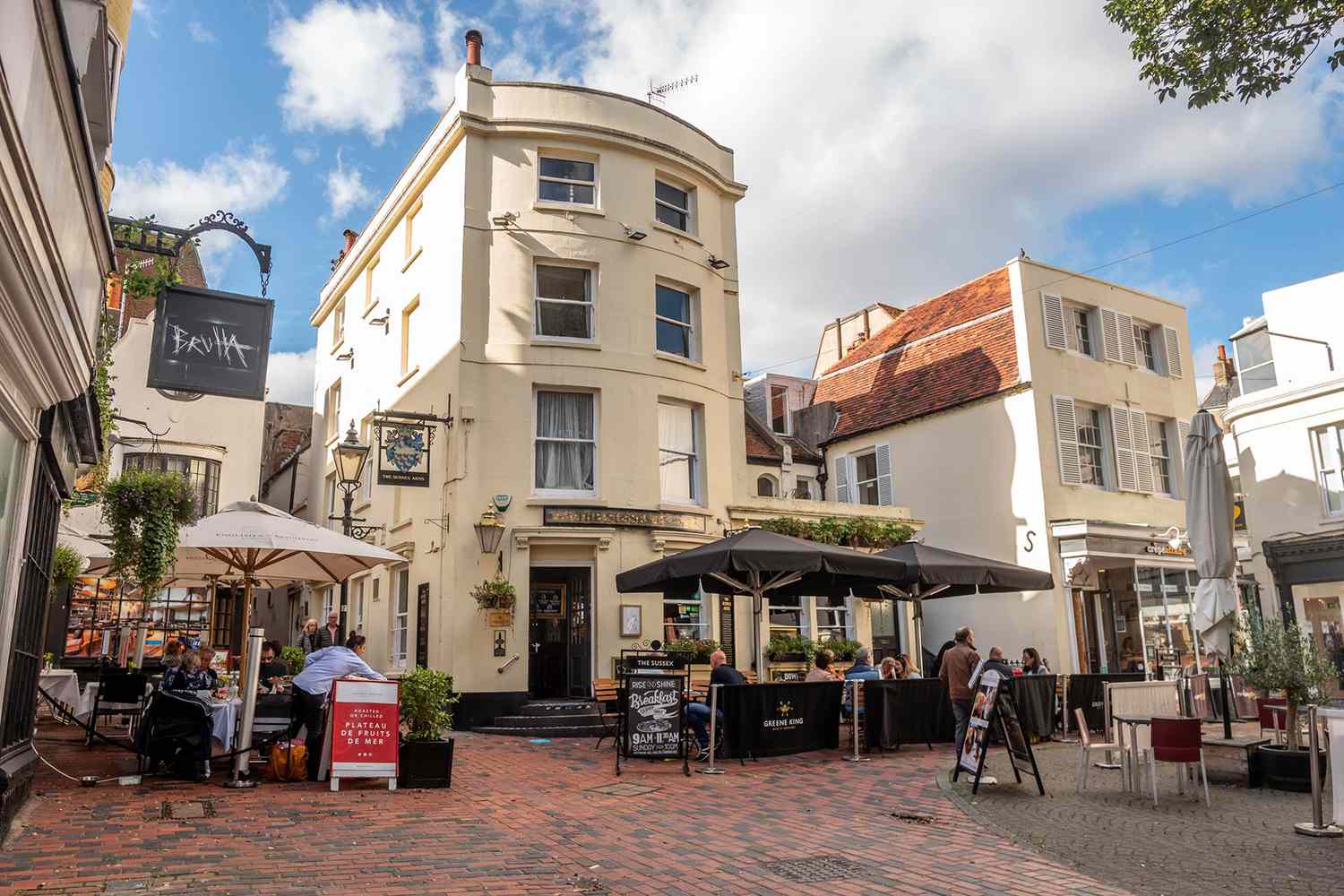
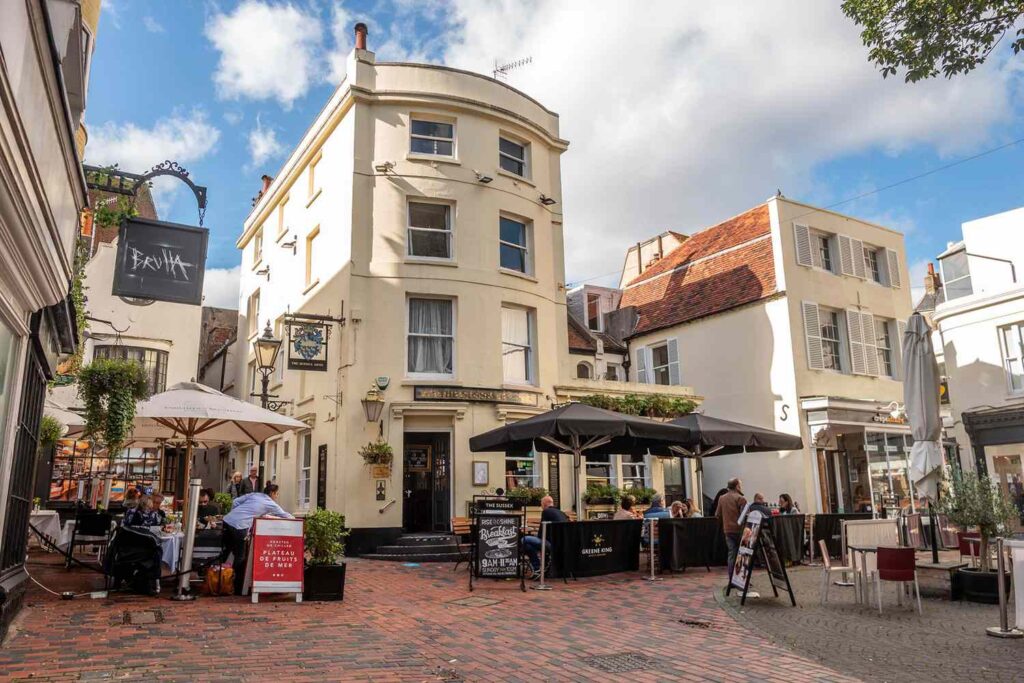
We’re off to Brighton! Its coastal location on the English Channel made it strategically relevant, particularly during periods of tension or war with France. In earlier centuries, the settlement—originally known as Brighthelmstone—was a small fishing village vulnerable to raids, smuggling and coastal erosion, but as the threat of French invasion grew in the 18th and early 19th centuries, its shoreline took on greater military importance.
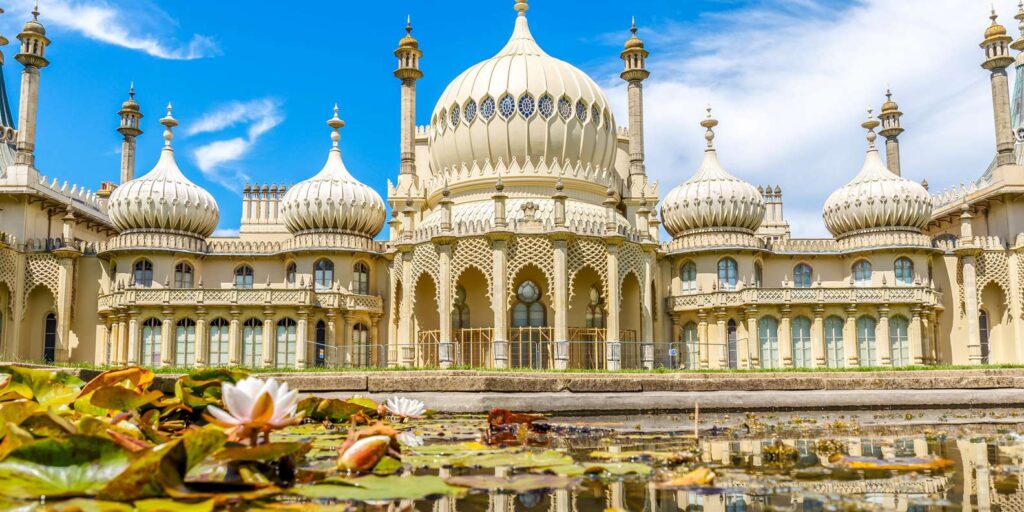
During the Napoleonic Wars, Brighton’s role became more defensive than operational. The Royal Pavilion, which is now one of the city’s most iconic buildings, was repurposed during this period. Though it was built as a seaside palace for the Prince Regent (later King George IV), it was later used as a military hospital for Indian soldiers during World War I.
Throughout the 19th century, Brighton was better known as a fashionable seaside resort than a naval stronghold, attracting royalty, gentry, and tourists rather than warships. However, its proximity to important ports like Portsmouth and Newhaven meant that it often served as a waypoint or temporary station for naval operations. growing in popularity as a seaside resort, believed to offer health benefits from sea bathing and fresh air. The Prince, suffering from gout and other ailments, began visiting the town regularly and commissioned the construction of a small Marine Pavilion to serve as his seaside retreat.
As George’s tastes became more extravagant, he expanded the building into something far more lavish. In the early 1800s, he hired architect John Nash, one of the leading designers of the Regency era, to transform the Pavilion. Nash redesigned the building in a flamboyant style, inspired by Indian Mughal architecture, with domes, minarets, and ornate details. The interior was equally dramatic, decorated in a Chinese-inspired style known as chinoiserie, featuring dragons, gilded surfaces, and elaborate chandeliers. The result was a building unlike anything else in Britain, a fantasy palace by the sea. The Royal Pavilion began as a modest lodging house in the late 18th century before evolving into one of the most exotic and iconic buildings in Britain. Oh, the stories I could tell you about the Pavilion and the people who visited during Prinny’s time there! Correction, the stories I am going to tell you.
Once we’ve toured the gardens and the ground floor of the Pavilion, you’ll be free to explore the rest of the building on your own and then take the rest of the day to wander Brighton, visit the Brighton Fishing Museum, stroll the seaside promenade, visit the Lanes for some retail therapy and find refreshments at one of Brighton’s many restaurants and pubs before we meet up again at our hotel for dinner this evening.
Day 7
This morning we’ll head to our final destination of Portsmouth, visiting Arundel Castle, seat of the Dukes of Norfolk, on the way. The Castle’s interiors reflect the tastes and fortunes of the family over the past one thousand years, and include tapestries, armor, and an impressive collection of paintings by masters such as Van Dyck and Gainsborough. Each room tells a different part of the castle’s story, from its Norman beginnings to its Victorian renovations.
There will be time afterwards for you to stroll through the formal gardens or enjoy lunch or refreshments before we travel on to Portsmouth, where we’ll check into our hotel before going on to dinner.
Day 8
Portsmouth has long been at the heart of the Royal Navy, and this morning we’ll visit the Historic Dockyard, home to some of the Royal Navy’s most iconic warships, including HMS Victory, the flagship of Admiral Nelson during the Battle of Trafalgar. Walking the decks of this preserved 18th-century ship gives a powerful sense of what life at sea was like for sailors during the age of sail. Just a short walk away is HMS Warrior, a 19th-century iron-hulled warship that marked the transition from sail to steam. With its massive guns and engine rooms still intact, it provides insight into the technological evolution of naval warfare.
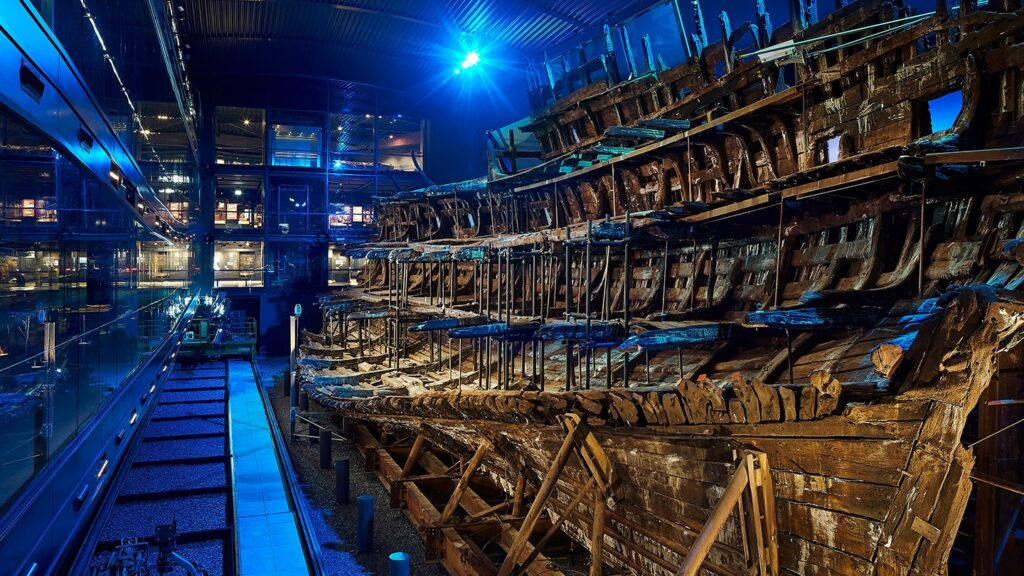
Another must-see at the dockyard is the Mary Rose Museum, housing the remains of Henry VIII’s flagship, which sank in 1545 and was raised from the seabed in 1982. The preserved hull, along with thousands of personal and military artifacts recovered from the wreck, paints an incredibly detailed picture of Tudor naval life. The storytelling and presentation are immersive, combining archaeology, science, and personal narratives to bring the era vividly to life.
The itinerary also includes a visit to the National Museum of the Royal Navy, an immersive experience that traces over 350 years of naval history. Through compelling exhibits, personal stories, and carefully curated artifacts, the museum brings to life the evolution of the Royal Navy—from wooden warships and sea battles to modern maritime operations. It offers a deeper appreciation for the people, innovations, and events that have shaped Britain’s naval legacy.
To mark the end of our journey, we’ll gather this evening for a farewell dinner and a chance to share the highlights of our trip, and enjoy a final evening together in a setting full of charm and history.
What’s included
8 nights in a 4 star hotel
9 Breakfasts
6 Dinners
Admission to all scheduled venues/museums
Transportation to all scheduled venues/museums
Services of a professional guide throughout